
Plasma Polishing vs. Hand Finishing: The Key to Unlocking Next-Level Dental Lab Efficiency
Plasma Polishing vs. Hand Finishing: The Key to Unlocking Next-Level Dental Lab Efficiency
Don’t Let Post-Processing Hold Your Lab Back
In the rapidly evolving landscape of the dental industry, the transition from labor-intensive craftsmanship to technology-intensive precision is undeniable. At Certainteed Dental Lab, we recognize that automation technologies are no longer optional—they are essential. The integration of advanced 3D printers has already proven highly successful in the production of complex dental pieces, particularly in the creation of high-quality partial denture frameworks.
Following the critical 3D printing stage, achieving a superior, high-quality surface finish is paramount for patient comfort and restoration longevity. The decision between cutting-edge plasma polishing and time-honored traditional hand polishing presents a crucial strategic choice for any lab committed to optimal results.
Let’s explore the nuanced differences between these two methods across four key dimensions: effectiveness, time efficiency, labor cost, and environmental impact.
Effectiveness
Plasma Polishing
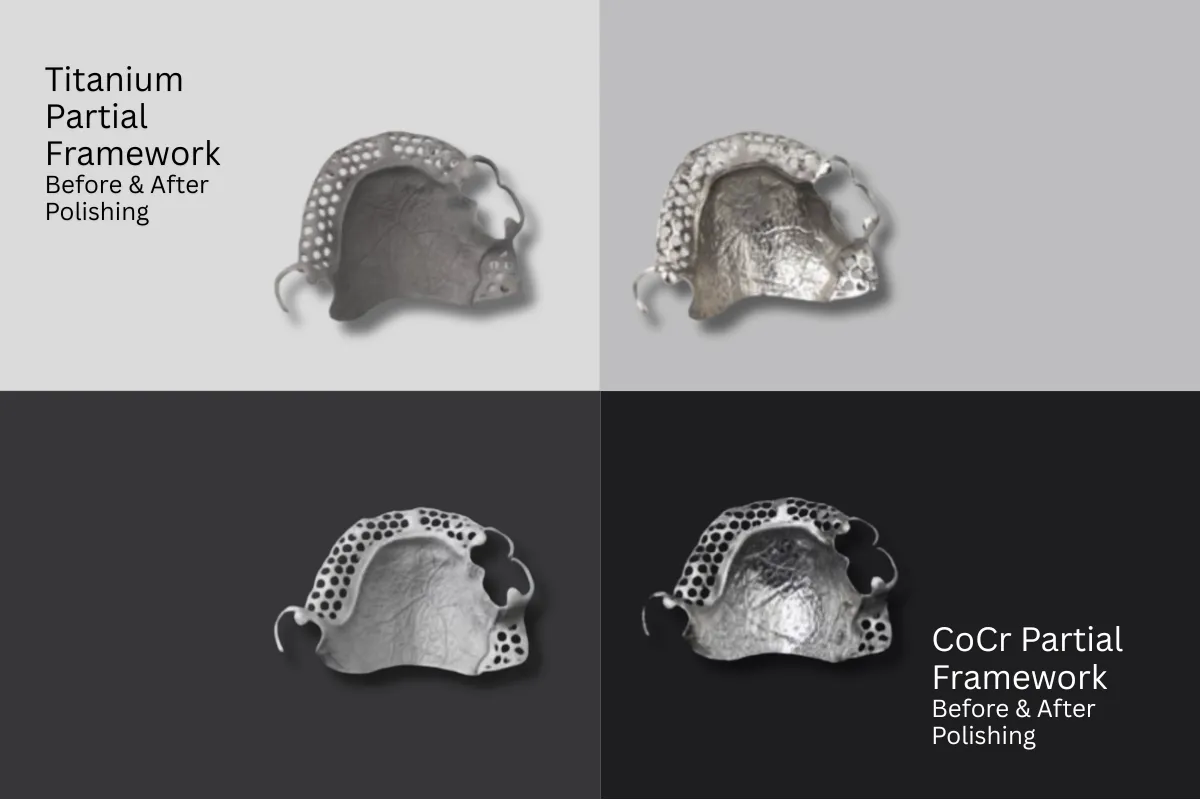
Employing cutting-edge nano-level technology, plasma polishing achieves an unparalleled level of consistency and brilliance in surface finishing. Its precision extends seamlessly even to the most intricate and complex geometries of a partial framework, ensuring a flawlessly reflective surface with virtually zero imperfections. This automated process eliminates the human variability inherent in manual methods, guaranteeing a superior, uniform result every time.
Traditional Hand Polish
While a highly skilled technician can certainly yield satisfactory results, the effectiveness of traditional hand polishing is often compromised by human factors and fatigue. Despite meticulous craftsmanship, maintaining absolute uniformity and eliminating microscopic imperfections, particularly within the complex, hard-to-reach areas of a restoration, poses significant and costly challenges.
Time Efficiency
Plasma Polishing
With an impressive material removal rate of approximately 1μm per minute and a fully automated, hands-off process, plasma polishing dramatically accelerates production timelines. What previously demanded hours of focused manual labor can now be accomplished in a fraction of the time, thereby optimizing the lab's overall efficiency and increasing output capacity without sacrificing quality.
Traditional Hand Polish
Conversely, traditional hand polishing is heavily reliant on manual labor and requires meticulous, step-by-step attention to detail. Every stage of the process, from initial abrasion and grinding to final buffing, consumes valuable technician time and resources, inevitably creating a bottleneck and extending the overall production schedule.
Labor Cost
Plasma Polishing
By minimizing the need for constant manual intervention and streamlining the entire finishing operation through automation, plasma polishing offers considerable and immediate savings in labor costs. With fewer personnel required to oversee multiple machines, our skilled technicians are freed to focus on high-value tasks like quality control and case planning, making resource allocation significantly more efficient.
Traditional Hand Polish
The labor-intensive nature of hand polishing necessitates a dedicated, skilled workforce, often requiring multiple artisans to manage the workload. As each surface must be meticulously crafted by hand, these escalating labor costs contribute substantially to the overall production expenses of the restoration, making the process less scalable and more expensive.
Environmental Impact
Plasma Polishing
In alignment with Certainteed Dental Lab's commitment to sustainability, plasma polishing utilizes neutral polishing materials that pose minimal risk to the environment during use and disposal. Furthermore, the highly automated processes and efficient material usage contribute directly to a significant reduction in waste generation and promote overall resource conservation within the lab.
Traditional Hand Polish
Unfortunately, traditional hand polishing methods often rely on abrasive chemicals and compounds that can present environmental hazards during both production and disposal. The safe handling and management of these substances require stringent safety protocols and incur additional costs for specialized waste treatment, adding another layer of operational complexity.
As the dental industry continues to navigate the evolving landscape of metal finishing, embracing innovative technologies like plasma polishing is instrumental in achieving optimal results while simultaneously minimizing environmental impact. At Certainteed Dental Lab, we have invested in this technology to ensure that every restoration we produce is finished with Certain Quality and Guaranteed Results, providing you with the digital advantage you need to succeed.
Contact Certainteed Dental Lab today to learn more about our advanced digital workflow and how we can partner for your success.
